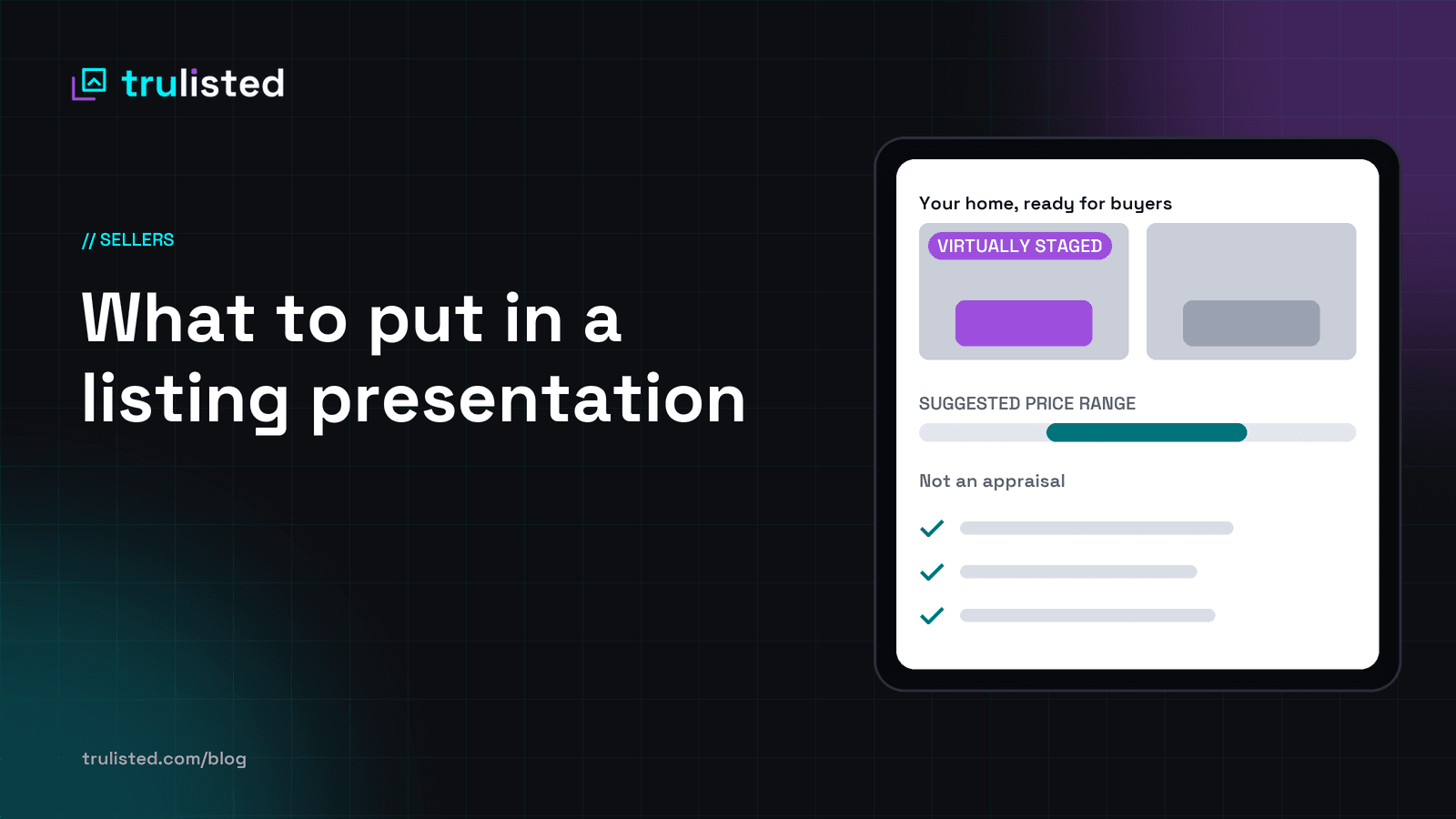
A listing presentation is the meeting where a seller decides who will sell their home, and at what price. The slides matter less than three things: whether you understood their home, whether your plan is clear, and whether you answered their questions straight.
This guide gives you a listing presentation template you can copy, section by section, with what to put in each part. It also covers how to present pricing, how to show sellers their own home before it's listed, the questions sellers ask, and how to follow up.
What a listing presentation is for
The goal isn't to show everything you know. It's to help the seller make one decision with confidence. By the end of the meeting, they should know:
- what you think the home will sell for, and why
- exactly how you'll market it
- what they need to do, and when
- how you'll keep them informed
- what it costs and what they're signing
Keep it about them. Before you present, ask about their goals: when they need to move, what matters most (price, timing or less disruption) and what worries them. Then shape the presentation around what you heard.
The listing presentation template: 12 sections
Copy this outline into your slides, a printed binder or a web page. Most sections take a minute or two. Give pricing and the marketing plan more time.
1. Your goals
- What you heard: timing, priorities and concerns
- Anything they asked you to cover
- One line on how your plan fits those goals
2. About you
- A short bio: the areas you know and how you work
- Two or three recent sales like their home
- Real reviews from past clients, used with permission
- Your brokerage and, if you have one, your team
3. About the home
- What you noticed on the walk-through, room by room
- What buyers in this price range will like
- What to fix, clean or store before photos, easiest first
- Facts to confirm: renovation dates, strata or HOA details, known issues
4. Pricing: your CMA
- Three to six recent sales of similar homes nearby
- Active listings the home will compete with
- Your adjustments, each with a short reason
- A price range, your suggested list price and the note "not an appraisal"
5. Marketing plan
- Everything you'll do, in order: prep, photos, launch, open houses, follow-up
- What your fee covers and what it doesn't
- Samples of past marketing: a flyer, a listing website, a reel
6. Photos and staging plan
- Who takes the photos, and when
- Which rooms to stage in person, stage virtually or leave as they are
- Previews made from the seller's own photos
- A floor plan or video, if you offer them
7. Online exposure
- The MLS® listing and where it appears in your market
- A listing website with all the photos and a way to book showings
- Social media posts, a reel and a "Just listed" email to your list
- Signs, with a QR code to the listing website
8. Open houses and showings
- How showings are booked and who attends
- Open house dates, if any, and how you'll promote them
- How you'll collect and share buyer feedback
- What to put away: valuables, medication and personal papers
9. Communication and seller updates
- How often you'll update them, and how: call, text or email
- What each update includes: views, showing requests, feedback, next steps
- Who to call if you're not available
10. Timeline
- Prep and repair dates
- Photo day, launch day and the first open house
- When you'll review the price together if offers don't come
- The usual steps from offer to closing
11. Fees and the agreement
- Your fee, what it covers and when it's paid
- How buyer-agent pay works in your market
- The listing agreement: its term, how it can end and other key terms
- The forms your brokerage and regulator require
12. Next steps
- What you need from them: signatures, keys, documents, access
- What you'll do in the next 48 hours
- A date to decide, if they need time
How to present pricing
Pricing is the part sellers listen to most closely, so slow down here.
- Say what a CMA is. A comparative market analysis is your professional opinion of a likely price range, based on recent sales. It isn't an appraisal, which is a formal valuation by a professional appraiser. Say so out loud and in writing.
- Show your work. Put the comparables on one page: address, sale date, size, sold price, and your adjustments for differences like size, condition, parking or a view. Sellers trust a number they can follow.
- Give a range, then a recommendation. Start with the range the sales support. Then explain where you'd list within it, and why.
- Show the competition. Buyers will compare the home with what's for sale now, so show the seller those listings too.
- Don't buy the listing. Never promise a higher price to win the meeting, or a sale by a certain date. Agree instead on when you'll review the price together, such as after a set number of showings.
Show sellers their own home, before it's listed
Sample photos from someone else's listing prove you can hire a photographer. Previews made from the seller's own photos show them what buyers will actually see.
- Take a few phone photos on your first visit, or ask the seller for recent ones.
- Brighten and straighten two or three, so the seller sees what good editing does.
- Virtually stage one empty or dated room, or show a twilight version of the front.
- Label every staged or altered preview, just as you would on the MLS®. It shows the seller how disclosure works from day one, and that you won't change permanent features like walls, floors or views. See honest AI photo edits for where the line is.
Previews also make the prep talk easier. Showing a seller their own living room, decluttered and labelled, does more than telling them to tidy up.
Questions and objections sellers raise
Prepare a short, honest answer to each of these before you go in.
- "Another agent said it's worth more." Ask which sales that number was based on, then walk through your comparables together. Buyers set the price, not the highest quote.
- "Can you lower your fee?" Explain what the fee pays for, item by item from your marketing plan, and what would change if the fee changed.
- "Should we wait for spring?" Show the latest numbers from your board and talk about their timing, not a forecast.
- "Do we really need staging?" Show the preview of their own room, and the cost of each option.
- "How will I know what's happening?" Show a sample seller update and say how often you'll send one.
- "What if it doesn't sell?" Point to the price review dates in your timeline and what you'll change at each one.
Follow up after the meeting
- The same day: send a short thank-you with the presentation, the CMA and answers to anything you promised to look up.
- Within two days: call to ask if they have questions. Offer to walk them through the listing agreement before they sign.
- If they need time: agree on a date to talk again, and send updated numbers if new sales come up nearby.
- If they say yes: book the photographer, send the prep list and start your timeline.
- If they choose someone else: thank them and ask what made the difference. Before you add them to a mailing list in Canada, check CASL's consent rules. Our Just listed email guide explains them.
Compliance: keep the presentation honest
A listing presentation is marketing, so the usual advertising rules apply.
- Don't guarantee a price or a sale date. A CMA is an opinion. If your brokerage runs a guaranteed sale program, use its approved wording. BCFSA's advertising checklist asks that any promise or offer show its conditions.
- Back up your claims. "Top agent in the area" needs a basis. The same checklist asks for the source, date and details behind comparative claims and awards.
- Use real reviews, with permission. In the US, the FTC's rule on fake reviews and testimonials bans fake reviews, including AI-written ones, and insider reviews that hide the connection.
- Check the wording in your bio and reviews. A review that says "great for young families" describes buyers, not the home. Leave it out, or ask the client if you can use another part. Our free fair housing checker catches common phrases.
- Show your brokerage name, and your Personal Real Estate Corporation name in BC, as on any ad. See ad rules agents often miss.
- Label staged previews, and keep the "not an appraisal" note on your CMA.
- In BC, use your brokerage's forms. The Disclosure of Representation in Trading Services form explains your relationship with the seller. BCFSA's FAQ on the form says to provide it when you expect an ongoing relationship, and before you discuss confidential details like someone's motivation or finances. The listing agreement terms come from your brokerage's forms too. Elsewhere, ask your managing broker which forms apply.
Building your presentation in Trulisted
On Trulisted's Pro plan (CA$42 / US$31 a month) and the Group plan, a listing presentation is a private page for one seller. It brings together your marketing plan, up to three previews made from the seller's own photos, your quick CMA price range with the "not an appraisal" note, your bio and your reviews. Your bio and reviews go through a fair-housing wording check before you can share the link. Enhanced previews are free, and staged or twilight previews use credits, like any virtual staging.
When the seller says yes, tap "I got the listing" and the presentation becomes the listing, with the same details and photos. Seller updates, on every plan, then help you keep the communication promise you made at the kitchen table. Compare plans on the pricing page.
Frequently asked questions
How long should a listing presentation be?
Plan for about an hour at the seller's home, including the walk-through. Aim to present for 20 to 30 minutes and leave the rest for the seller's questions. If you send part of it ahead, you can spend more of the meeting on pricing and their concerns. Cover pricing, the marketing plan and next steps in person, and leave the details in writing.
What do sellers want to see in a listing presentation?
A price they can believe, a clear plan and proof you'll follow through. Show the comparable sales behind your price range, the marketing plan step by step, previews of their own home, real reviews and how you'll keep them informed. Skip long company histories and generic charts, and keep the focus on their home and their goals.
What is the difference between a CMA and an appraisal?
A comparative market analysis (CMA) is an agent's opinion of a likely price range, based on recent sales of similar homes. An appraisal is a formal valuation by a professional appraiser, often ordered by a lender. A CMA doesn't replace an appraisal, so label it "not an appraisal" in your presentation and in any report you leave with the seller.
Should I send the listing presentation before the meeting?
Sending part of it ahead can help, because the seller arrives with questions instead of meeting you cold. One approach is to send your bio, reviews and marketing plan beforehand and keep pricing for the meeting, so you can explain the comparables in person. Afterwards, send the full presentation with the CMA so the seller can review it at their own pace.
What should be on a listing presentation checklist?
Before you go: your CMA, marketing samples, previews made from the seller's photos, a sample seller update, your brokerage's listing agreement and disclosure forms, and a short prep list for the seller. At the meeting: their goals, the walk-through, pricing, your plan, fees and the agreement, and a clear next step with a date.
Can I show virtually staged photos in a listing presentation?
Yes, as long as each one is labelled as virtually staged and only movable furniture and decor have changed. Previews made from the seller's own photos help them picture the result. Labelling them from the start also sets the standard you'll follow when the listing goes live, with the original photos linked.
This article is general information, not legal advice. Rules for advertising, disclosure and agreements differ by province, state, board and brokerage. Check your board and brokerage before you rely on it.